The Benefits of Reading to Babies (And Why It Matters More Than You Think)
You’ve probably been told to read to your baby since about day two.
Somewhere between the feeding, the lack of sleep and just trying to keep everyone alive, it gets added to the list of things you should be doing.
And if you’re honest, there are moments where you sit there with a book in your hand thinking…
Is this doing anything?
Because your baby isn’t sitting quietly, soaking up the story.
They’re grabbing pages.
Losing interest.
Trying to eat the book.
It doesn’t exactly scream “future academic success,” does it?
But the benefits of reading to babies don’t show up in neat, obvious ways. They build slowly, quietly, over time—and they start much earlier than most people realise.
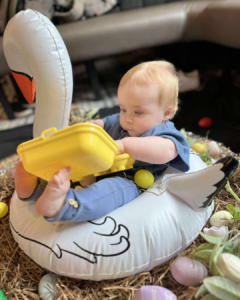
When you read to your baby, even in those slightly chaotic, imperfect moments, their brain is doing something pretty incredible.
They’re listening to the rhythm of your voice. They’re starting to recognise sounds and patterns. And without you even noticing, they’re building the foundations for language development.
Research from organisations like National Literacy Trust shows that early exposure to books plays a key role in developing communication skills and future learning.
That’s one of the biggest benefits of reading to babies—it supports how they understand and eventually use language. Not through flashcards or formal teaching, but through something that feels safe and familiar.
And then something subtle starts to happen.
They recognise the story.
They anticipate what’s coming next.
They react before you even turn the page.
That’s memory forming. That’s learning in action.
If you’ve ever found yourself reading the same book over and over again, there’s a reason that repetition matters—research highlighted by BookTrust explains how familiar stories help babies build memory and confidence.
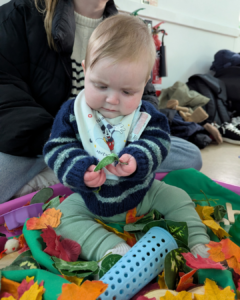
Another thing people don’t always realise about reading to babies is that it’s not really about the book.
It’s about the interaction.
You read a line, then pause.
They look at you, make a sound, move their body.
You respond.
That back-and-forth is what child development experts call “serve and return”—a concept supported by the Harvard Center on the Developing Child—and it’s one of the most important ways babies learn to communicate.
Long before they can talk, they’re learning how conversations feel.
And that plays a huge role in both language development and social confidence later on.
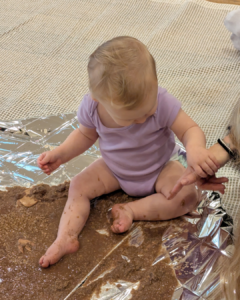
There’s also a quieter benefit that often gets overlooked.
When you read to your baby, they’re watching you just as much as they’re listening.
They notice your facial expressions. The way your voice changes. The excitement, the softness, the pauses.
This is how they begin to understand emotions.
According to NSPCC, these early interactions help babies start to recognise and respond to emotions—laying the groundwork for empathy and emotional development.
So when people ask, “does reading to babies make them smarter?” the answer is yes—but not just academically.
It supports emotional intelligence too. And the two are far more connected than we tend to think.
And then there’s the part that really stays with them.
Your baby might not remember the story itself, but they remember the feeling of it.
Being close to you.
Hearing your voice.
That sense of calm and attention and connection.
When reading becomes tied to those feelings, books become something positive. Something comforting. Something they want to come back to.
That’s where a lifelong love of reading begins—and organisations like BookTrust regularly highlight how these early experiences shape long-term reading habits.
If you’ve ever worried that you’re not doing it “right,” it’s worth saying this clearly:
There is no perfect way to read to your baby.
Sometimes you’ll get through a whole book. Sometimes it’s two pages. Sometimes it’s the same story on repeat until you could recite it backwards.
All of it counts.
Because the benefits of reading to babies don’t come from getting it right—they come from doing it at all.
This is exactly why reading plays such a big role in what we do at Adventure Babies.
If you’re looking for simple ways to bring stories to life at home, you might also enjoy our guide to sensory play and baby development.
And if you’re ready to take it a step further, you can find your nearest Adventure Babies class here.
Because when you take those same stories and bring them to life through sensory experiences, movement and play, it deepens everything.
Babies don’t just hear the story—they experience it. And that makes it more memorable, more engaging, and more meaningful.
So if you’re wondering whether it’s worth picking up that book today, even if it feels like a small thing, this is your reminder:
It matters.
Reading to your baby is supporting their brain development, their language skills, their confidence, and their understanding of the world.
It’s helping shape how they learn, how they connect, and how they feel.
And it all starts in those ordinary, slightly messy, completely imperfect moments you’re already having.
Want to make storytime even more magical?
Explore your nearest Adventure Babies class and start your journey today 💛