Sensory Development: How Babies Learn About the World
Why everyday moments matter more than you think
Long before babies can talk, crawl, or even sit up, they are already busy learning about the world. Not through flashcards or toys with buttons — but through their senses.
The feel of a soft blanket.
The sound of a familiar voice.
The way light moves across a room.
For babies, these tiny moments aren’t background noise. They’re information. And their brains are soaking it all in.
Why Sensory Development Matters in the First Year
In the first 9 months of life, a baby’s brain develops at an extraordinary pace. Every time a baby touches, watches, listens, or moves, neural connections strengthen.
When babies:
-
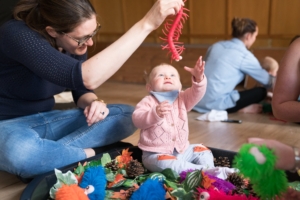
explore different textures
-
respond to sounds
-
track movement with their eyes
…they’re laying the groundwork for future skills like concentration, coordination, communication, and emotional regulation.
However, sensory development isn’t about more. It’s about meaningful.
Babies don’t need constant stimulation. In fact, too much noise, movement, or visual input can overwhelm an immature nervous system, often showing up as fussiness, turning away, or disengagement.
The goal is gentle exposure that invites curiosity without pressure.
Sensory Storytelling at Adventure Babies
At Adventure Babies, sensory play is woven into storytelling — because stories naturally offer rhythm, repetition, and emotional safety.
Classes gently combine:
-
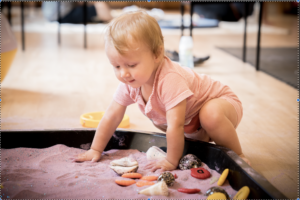
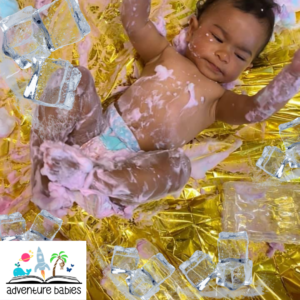
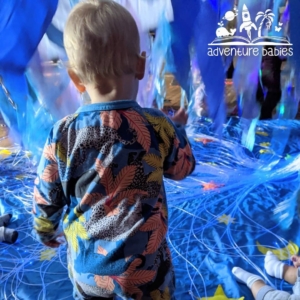
Textures: soft fabrics, sensory props, and tactile materials
-
Sounds: calm voices, repeated rhymes, gentle instruments
-
Movement: swaying, bouncing, reaching, and rolling
Nothing is rushed. Each element is introduced slowly, allowing babies to explore in their own time.
Just as importantly, repetition plays a key role. Familiar songs and story patterns help babies anticipate what’s coming next. That sense of predictability builds confidence and supports attention — both essential for early brain development.
Sensory Development Doesn’t Need Fancy Equipment
One of the biggest misconceptions about sensory play is that it requires specialist toys or elaborate setups.
In reality, everyday life is full of sensory opportunities.
At home, you might:
-
let your baby feel a wooden spoon, a soft cloth, or cool grass
-
describe what they’re seeing or touching in simple language
-
sing gentle songs or use rhythmic clapping during play
These small, shared moments support sensory development just as effectively — and they strengthen connection too.
For trusted, evidence-based insight, UNICEF UK highlights how early sensory experiences support healthy brain development and lifelong learning:
👉 https://www.unicef.org.uk
Why Baby Classes Can Feel So Reassuring
Many parents quietly worry: Am I doing enough? Or too much?
This is where baby classes can make a real difference.
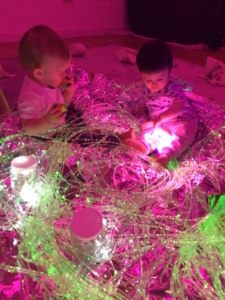
Adventure Babies classes offer a calm, structured environment where parents can see sensory play in action — without overwhelm. They provide reassurance about pace, repetition, and what babies genuinely benefit from at different stages.
Parents often leave feeling more confident, with simple ideas they can carry into everyday life.
And babies? They get to explore a sensory-rich world that feels safe, predictable, and full of wonder.
The Bigger Picture
Sensory development isn’t about ticking boxes or hitting milestones.
It’s about giving babies the space, time, and support to experience the world — one sensation at a time.
And often, the most powerful learning happens in the quiet, ordinary moments you’re already sharing.