
Baby Movement Milestones: Supporting Motor Skills from 0–9 Months
Watching a tiny baby discover their body for the first time is pure magic. That first wriggle, the determined leg kicks, the moment they lift their head during tummy time — it’s breathtaking.
And yet, for many parents, those awe-filled moments come with a side of worry: Am I doing enough? Are they on track?
You’re not alone. These thoughts swirl in the minds of nearly every new parent. The good news? Understanding baby physical development and offering the right opportunities for movement is easier than it seems.
Why Baby Physical Development Matters
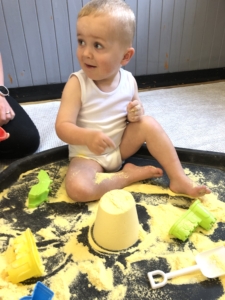
Physical development isn’t just about hitting milestones. For babies aged 0–9 months, it’s about learning how their body works — building strength, coordination, and body awareness.
Every tiny movement — stretching, kicking, reaching, or pivoting — strengthens muscles, improves balance, and teaches their brain how their body moves in space. These foundational skills pave the way for rolling, sitting, crawling, and eventually walking.
And remember: babies develop at their own pace. Some roll at four months, others at six or seven — all perfectly normal. The focus should be on creating safe opportunities for movement and celebrating every small achievement along the way.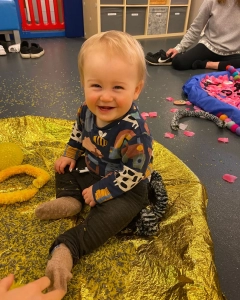
Understanding Baby Movement Milestones
Between birth and nine months, babies typically begin to explore their world through movement in stages:
-
0–3 months: Lifting head during tummy time, tracking objects with eyes, making small arm and leg movements
-
3–6 months: Reaching and grabbing, pushing up on arms, rolling over
-
6–9 months: Pivoting on tummy, sitting with minimal support, starting to crawl or scoot
These milestones aren’t a checklist — they’re guides to help you provide opportunities for your baby to strengthen muscles and explore safely.
Tummy Time: Making It Fun
Many parents dread tummy time because babies often protest at first. But short, frequent sessions — even just a few minutes — are more effective than long stretches.
Tips to make it enjoyable:
-
Lie down at your baby’s eye level for encouragement
-
Use mirrors, soft textures, or high-contrast toys
-
Sing, talk, or incorporate storytelling to keep it playful
-
Place objects just out of reach to encourage stretching and reaching
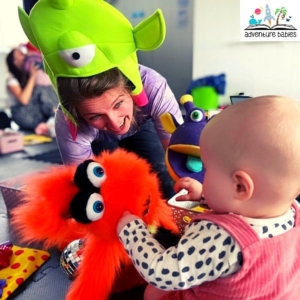
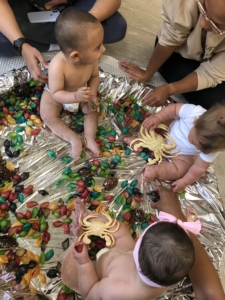
At Adventure Babies, tummy time is woven into storytelling and sensory play, turning strength-building into an exciting game. Babies naturally lift, pivot, and reach while fully engaged — and parents gain confidence supporting them.
How Movement Supports Brain Development
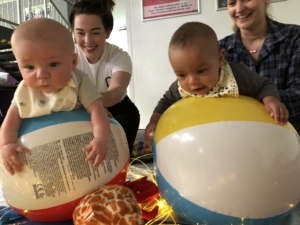
Physical development and sensory experiences go hand in hand. When babies move while exploring textures, tracking objects, or responding to gentle sounds, they’re forming millions of neural connections. Movement is learning.
The Early Years Foundation Stage (EYFS) framework highlights how everyday activities, from reaching to rolling, contribute to a baby’s overall growth and cognitive development: EYFS guidance.
How Adventure Babies Classes Can Help
Adventure Babies classes offer structured, playful ways to support baby motor skills 0–9 months and nurture baby movement milestones:
-
Gentle, age-appropriate movement opportunities
-
Safe, sensory-rich environments for exploration
-
Guidance and reassurance for parents watching development unfold
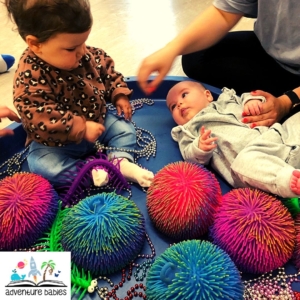
Watching your baby push up, pivot, or reach during an interactive story strengthens muscles and builds confidence — for both parent and baby. Movement becomes joyful exploration rather than a task.
Celebrate the Journey, Not Just the Milestones
Baby development isn’t a race. Every kick, lift, and roll is part of a bigger journey. By creating playful, supportive opportunities for movement, you’re giving your baby a strong foundation for life — physically, mentally, and emotionally.

Ready to encourage your baby’s motor skills in a fun, supportive environment?
👉 Find a class near you with Adventure Babies