Baby Language Development: What It Really Looks Like at 6–12 Months
Let’s start with something most parents don’t say out loud — but absolutely think.
“My baby isn’t really talking yet… should I be worried?”
If your baby is between 6–12 months, chances are you’ve already caught yourself comparing.
The baby who babbles constantly.
The one who seems to say “mama” at six months.
The well-meaning comment from someone else that plants a tiny seed of doubt.
Here’s the refreshing truth:
Baby language development doesn’t start with words.
And if you’re only listening for speech, you’re missing most of what’s happening.
What Baby Language Development Really Looks Like at 6–12 Months
Between 6 and 12 months, baby language development is incredibly active — even if it sounds quiet on the surface.
At this stage, language development is mostly about:
- Listening
- Watching mouths and faces
- Experimenting with sounds
- Learning rhythm, tone and turn-taking
This is the foundation phase. The bit no one films for milestone reels — but the bit everything else is built on.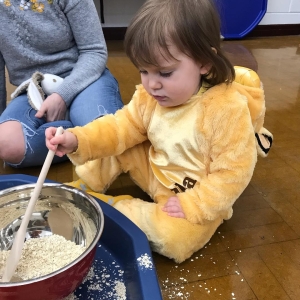
Babbling Isn’t Random in Baby Language Development (Even When It Sounds Like It Is)
Those strings of sounds — “ba-ba-ba”, “da-da-da”, “ga-ga” — aren’t meaningless noise.
They’re your baby practising:
- How sounds feel in their mouth
- How long sounds last
- What happens when they change pitch or volume
- How adults respond
When your baby babbles and you respond — with words, eye contact or a smile — their brain starts making powerful connections.
Sound → response → meaning.
That’s language development in action.
The Pause Matters More Than the Words
One of the biggest (and most overlooked) language milestones at this age is turn-taking.
When your baby:
- Makes a sound
- Pauses
- Looks at you
They’re inviting you into a conversation.
And when you respond — and then pause back — you’re teaching them that communication is shared. That voices go back and forth. That their sounds matter.
This back-and-forth rhythm is the backbone of future speech.
Why Quiet Babies Are Still Learning Language
Some babies are loud processors. Others are quiet observers.
A baby who:
- Watches closely
- Studies faces
- Listens more than they vocalise
…is often soaking up language in a different way.
Language development isn’t about volume. It’s about exposure, interaction and connection.
And yes — quiet babies still talk. Often very suddenly.
How Movement and Sensory Play Support Baby Language Development
Here’s a link many parents don’t expect:
Language development and physical movement are deeply connected.
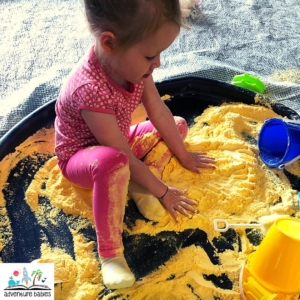
When babies move, explore textures, reach, crawl and experience stories with their whole body, they’re building:
- Attention and focus
- Memory
- Understanding of cause and effect
- Motivation to communicate
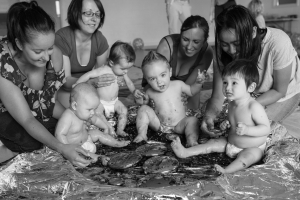
This is why sensory-rich experiences are so powerful between 6–12 months.
They give babies something worth communicating about.
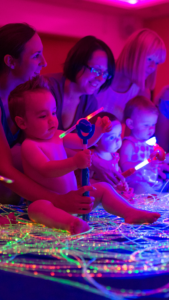
Supporting Baby Language Development in Adventure Babies Classes
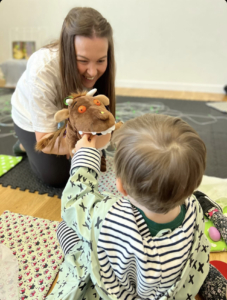
In Adventure Babies classes, language development is happening constantly — even before babies say a single word.
Through:
- Repetitive phrases in stories
- Music and rhythm
- Sensory props
- Shared moments of anticipation and surprise
Babies learn to recognise sounds, predict what comes next and join in — first with their eyes, then their voices, and eventually with words.
It’s language learning that feels like play. Because it is.
A Reassuring Note for Parents
If your baby isn’t saying clear words yet — they’re not behind.
If they babble one day and go quiet the next — that’s normal.
If they seem more interested in watching than performing — that still counts.
Language development between 6–12 months is subtle, layered and deeply human.
And often, the babies who seem the quietest are building the strongest foundations of all.
A trusted UK resource on baby language development
If you’d like to explore early communication in a bit more depth, BBC Tiny Happy People offers excellent, evidence-informed guidance on language development in babies and toddlers — with lots of practical, pressure-free ideas for everyday interaction:
Many parents find this a reassuring companion to play-based experiences like baby classes and shared story time.