Physical Development in Babies and Toddlers: The Milestone Many Parents Don’t Hear About (But Should)
When parents think about physical development in babies and toddlers, the milestones that usually get all the attention are the big, obvious ones.
Rolling. Sitting. Crawling. Walking.
They’re exciting, easy to spot, and feel wonderfully reassuring when they arrive right on time. But underneath those headline moments is a quieter, lesser-known milestone that plays a huge role in how confidently your child moves, plays and eventually learns.
It’s called crossing the midline.
And while it doesn’t come with a neat date on a milestone chart, it’s one of the most important building blocks in early physical development.
What Does “Crossing the Midline” Mean in Baby Physical Development?
Midline is the invisible line that runs down the centre of your child’s body — from the top of their head to between their feet.
Crossing the midline happens when your baby or toddler reaches across that line with a hand, foot or eye.
Some everyday examples include:
* A baby reaching across their body to grab a toy
* A toddler twisting to pick something up from the floor beside them
* Clapping, banging objects together or passing toys from one hand to the other
* Crawling using opposite arm and leg
It sounds simple. But neurologically and physically, it’s doing a *lot* of work.
Why Crossing the Midline Matters for Physical Development
This skill is a key part of bilateral coordination — the ability for both sides of the body to work together smoothly.
When babies practise crossing the midline, they are:
* Strengthening core muscles
* Improving balance and postural control
* Helping the left and right sides of the brain communicate
* Building the foundations for coordinated movement
Over time, this supports key areas of baby and toddler physical development, including:
* Confident crawling and walking
* Climbing, jumping and running
* Using cutlery and dressing themselves
* Drawing, mark making and early writing skills
In other words, this tiny-looking movement supports some very big future skills.
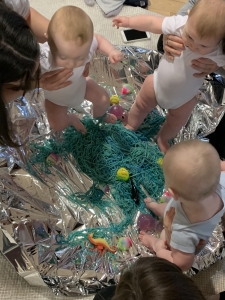
When Does This Physical Development Milestone Appear?
Crossing the midline begins to emerge during the second half of the first year and continues developing well into toddlerhood.
It’s especially visible when babies:
* Start rolling and pivoting on the floor
* Begin sitting and reaching for toys
* Learn to crawl using a reciprocal (opposite arm and leg) pattern
Some children develop this skill effortlessly. Others need more time, space and varied movement experiences — all of which is completely normal.
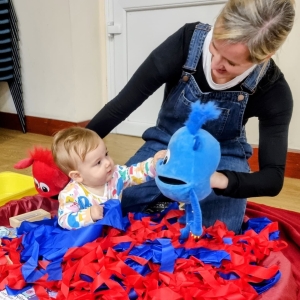
How Play Supports Physical Development in Babies Naturally
The good news is that babies don’t need to be taught to cross the midline. They need opportunities.
Movement-rich, sensory play is one of the most effective ways to support this milestone because it encourages:
* Reaching in different directions
* Twisting and rotating the body
* Weight shifting from side to side
* Using both hands together
Simple activities like scarves, bubbles, textured props and interactive storytelling invite babies to move their bodies in varied, meaningful ways — without pressure or expectation.
This is one of the reasons sensory-led classes are so powerful for physical development through play in babies. They naturally blend movement, curiosity and repetition, allowing babies and toddlers to practise these skills again and again in a joyful, low-pressure environment.
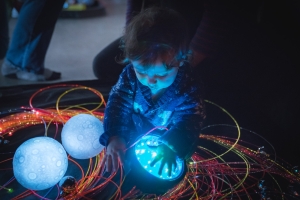
Supporting Physical Development in Adventure Babies Classes
In Adventure Babies sessions, physical development is woven gently into every story and activity. You can explore our classes here: [Find an Adventure Babies class near you](https://www.adventurebabies.co.uk/classes).
Babies reach, twist, crawl, climb and explore as part of an immersive experience — often without parents even realising how much physical learning is happening.
From stretching to touch sensory props, to moving through space during stories, children are constantly practising:
* Core strength
* Balance and coordination
* Crossing the midline
* Whole-body movement
And because it’s play-based and story-led, it feels fun rather than functional — which is exactly how babies learn best.
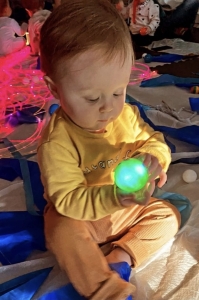
A Reassuring Note for Parents About Physical Development
If your baby prefers one hand, moves a little cautiously, or isn’t showing obvious midline crossing yet — that’s okay.
Physical development in babies and toddlers isn’t about ticking boxes. It’s about giving your child time, space and rich experiences to move in ways that feel natural to them.
Supporting milestones like crossing the midline doesn’t require flashcards, structured exercises or pressure.
It happens through play. Through stories. Through movement. And through moments of wonder.
Which, as it turns out, is exactly where Adventure Babies begins.
If you’re interested in how movement, coordination and play support your child’s development, the NHS Start for Life website offers clear, evidence-based guidance on physical development in the early years:
* [NHS Start for Life: Physical development in babies and toddlers](https://www.nhs.uk/start-for-life/baby/learning-to-talk/learning-to-move/)
It’s a reassuring resource many parents find helpful alongside play-based experiences like baby and toddler classes.
Looking for a playful, supportive way to nurture your baby or toddler’s physical development? Our sensory storytelling classes are designed to grow with your child — from tiny movements to confident explorers.