When Do Babies Start Talking? First Words, Funny Sounds & What’s Really Going On
If you’ve landed here after googling “when do babies start talking” while your baby enthusiastically shouts “ba ba ba ba!” at the dog — welcome. This is a very normal stage of parenting (and of baby development).
Talking doesn’t arrive suddenly or neatly. It builds slowly through babbling, repetition, pointing, shouting and a lot of trial and error. And while first words feel like the big moment, there’s a huge amount happening before and after that matters just as much.
Let’s unpack it.
When Do Babies Start Talking?
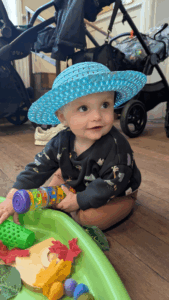
Most babies say their first recognisable words somewhere between 9 and 15 months — but there’s a wide range of normal.
What often surprises parents is that babies usually understand far more than they can say. Many babies recognise dozens (sometimes hundreds) of words before they ever attempt one out loud. They’re listening, storing, and quietly working it all out.
Talking is actually one of the most complex skills your baby will learn. Walking is easier. (Honestly.)
Before Words: Babbling Is Doing Serious Work
Before babies talk, they practise.
From birth to around 6 months
Early sounds include:
-
Crying (remarkably effective communication)
-
Coos and gurgles
-
Long vowel sounds like “ah” and “oo”
These sounds come first because they’re physically easier — babies don’t need much lip or tongue control yet, just airflow and vocal cords.
Around 6–10 months: Babbling kicks in
This is when babies start repeating sounds like:
-
ba
-
ma
-
da
-
pa
It might sound like nonsense, but babbling helps babies:
-
Strengthen mouth muscles
-
Practise rhythm and timing
-
Learn the back-and-forth of conversation
And yes — babies babble more when adults respond. Even copying their sounds back teaches them that communication is a two-way thing.
Why Do Babies Say “Ba” and “Ma” First?
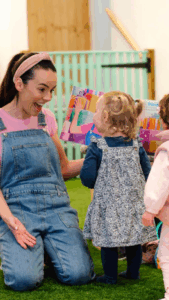
If you’ve ever wondered why “mama” often beats “cat”, there’s a very practical reason.
Some sounds are simply easier for babies to make.
-
B & P use the lips (easy to see and copy)
-
M uses the lips and nose
-
D & T just need a quick tongue tap
Harder sounds like s, l, r, f and th need much more coordination — which is why many children don’t fully master them until years later. So those adorable mispronunciations? Completely expected.
(And no — babies don’t say “mama” first because they love you more. It’s just an easy sound. Sorry.)
First Words: What Actually Counts?
One of the biggest worries around when babies start talking is whether something “counts” as a word.
A word doesn’t need to be clear. It needs to be consistent and meaningful.
For example:
-
Saying “ba” every time they see a ball
-
Using one word for a whole group (all animals = “dog”)
-
Saying “da” while pointing at Dad (pointing itself is a major communication milestone)
Pronunciation comes later. Meaning comes first.
What Happens After First Words?
Once babies realise that words get results, things often accelerate.
You might notice:
-
A slow trickle of new words
-
Then a sudden language burst (often around 18–24 months)
-
Two-word phrases like “more milk” or “mummy up”
This often coincides with better memory, more confidence and lots of repetition — babies love hearing the same words, songs and stories again and again because it helps everything stick.
How Books and Stories Help Babies Start Talking
If you’re looking for simple ways to support speech development, books are a brilliant place to start.
Reading helps because it:
-
Exposes babies to a wider range of words than everyday chat
-
Repeats key language (which babies thrive on)
-
Links words with pictures, actions and emotions
-
Encourages turn-taking and shared attention
At Adventure Babies, our sensory storytelling classes are designed around this. We combine:
-
Repetitive, rhythmic stories
-
Songs and actions that support early speech sounds
-
Shared moments between baby, adult and book — which are incredibly powerful for language development
👉 You can find out more about how our classes support early development here
A Final Word
If you’re asking “when do babies start talking”, the honest answer is:
they start long before the first word appears.
Babbling, pointing, copying sounds, listening intently and shouting “ba!” at inappropriate moments are all part of the process.
If you ever want a trusted reference point, the NHS speech and language development guidance explains what’s typical and when to seek support — calmly and without alarm.
So keep talking. Keep reading. Keep responding.
The words are coming — and they’ll arrive in their own wonderfully noisy time. 💛