When Do Babies Learn to Sit Up? Everything Parents Need to Know About This Big Milestone
If you’re currently googling “when do babies learn to sit up?” at 3am while your baby sleeps like a tiny starfish on your chest — welcome, friend. Sitting up is one of those milestones that feels HUGE. One minute they’re a floppy newborn potato… the next minute they’re upright, wobbling proudly like a baby penguin who’s just discovered its legs.
And even though it looks simple, sitting up is actually a major indicator of physical, cognitive and sensory development. So let’s break it down — in a way that’s genuinely helpful and makes you feel great about how brilliantly you’re doing.
So… when do babies learn to sit up?
There’s a range — and all of it is normal. Typically:
-
4–5 months: Baby begins propping themselves up with their hands
-
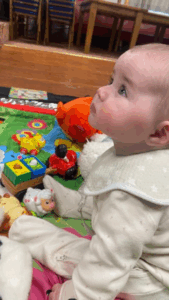
5–6 months: Baby can sit with support
-
6–9 months: Baby sits independently
Plenty of babies take their time getting there, a surprising number glide past the in-between stages altogether, and then there are the ones who seem to sit up out of nowhere, totally unfazed. All of these are wonderfully okay.
For official guidance, see the NHS overview on baby development here
Why sitting up matters more than you think
When babies sit up, they’re not just changing position — they’re unlocking a whole new level of development:
⭐ 1. Serious core strength
This is their mini gym workout. Sitting up strengthens the muscles they need for crawling, standing and eventually walking.
⭐ 2. Better hand–eye coordination
Now both hands are free for grabbing, banging, exploring and occasionally lobbing toys off their highchair.
⭐ 3. A brand-new view of the world
Suddenly they can see everything. This boosts curiosity, engagement, and cognitive development.
⭐ 4. More opportunities for communication
When babies sit up, they watch your face more, copy your sounds more, and interact more. It all feeds into early language development.
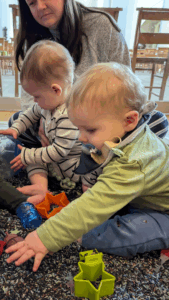
How to help your baby learn to sit up
No pressure, no baby gym membership, just simple daily play:
🧡 1. Tummy time is the hero
It builds neck, back and shoulder strength. Even tiny bursts count.
🧡 2. Supported sitting on your lap
Let them lean against you facing out. Give minimal support so they’re doing the work.
🧡 3. Tempt them with irresistible toys
Place toys slightly out of reach at chest height. Babies will try harder for something exciting.
🧡 4. Let them wobble safely
Wobbling isn’t failure — it’s essential muscle training. Think tiny Pilates with maximum cuteness.
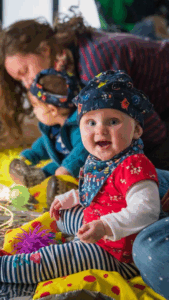
How Adventure Babies classes support this milestone
Adventure Babies classes are basically developmental magic wrapped in storytelling. While babies think they’re having fun, they’re actually working on core strength, balance, coordination and early communication — all key skills needed for sitting up.
In our sessions babies practise:
-
Reaching and grasping to strengthen their arms and core
-
Turning and balancing during sensory activities
-
Exploring from varied positions, boosting strength and confidence
-
Following movement during stories, which improves head control
-
Tummy time on sensory-rich mats, making the hardest skill more enjoyable
Plus, babies become more motivated when engaged in something exciting — and our immersive story worlds are definitely more exciting than staring at the living room ceiling.
And for parents? You get a fun, supportive space to celebrate every wobble, every near-sit, and the eventual triumphant “I DID IT!” moment.
The first sit-up: Fair warning — your heart will melt
That first time your baby sits up independently, their face lights up like the sun. Pride, surprise, joy… and yes, maybe the hint of mischief that comes with their new level of freedom.
And don’t worry — whatever stage your baby is at, they’re doing brilliantly. Every baby learns in their own time, and you’re supporting them exactly as they need.
If you’d love to help your baby build the strength, curiosity and confidence they need for milestones like sitting up, come join an Adventure Babies class near you.
It’s learning disguised as magic — just the way development should be.